Yolanda Berrueta
Ofrenda a la tormentaYolanda Berrueta’s search for her children’s bodies begins in grief that others interpret as illness, but ends by exposing a hidden crime. After three of her children die, she insists that the twins’ graves are empty and that the people responsible for their deaths have taken their bodies. Her certainty is treated with caution because of her psychiatric treatment, yet the evidence eventually vindicates her: one of the coffins contains a bag of sugar, not her first daughter’s remains.
Identity and Family Background
Yolanda is the wife of Marcel Tremond and the mother of three children, all of whom die young. Her first daughter, Haizea, is born a year before the twins and dies at two weeks old in her maternal grandparents’ home in Oieregi. Yolanda’s mother later explains that the loss precipitated her depression. Marcel had wanted a family and persuaded Yolanda to become pregnant again soon afterward, believing another child might ease her grief. In this account, the twins’ arrival briefly seems to revive her: when she held them, she appeared to come back to life.
The twins’ pregnancy was difficult. According to Marcel, Yolanda continued drinking and smoking, took tranquilizers, and used diet pills because she feared gaining weight. The babies were born prematurely, underweight, and with immature lungs. After spending their first two months in hospital, they came home, but respiratory problems led to two further admissions. On the night they died, Yolanda noticed that something was wrong; she and Marcel drove them for help themselves rather than waiting for an ambulance. The twins never regained consciousness and died sixteen minutes apart, the same interval that had separated their births.
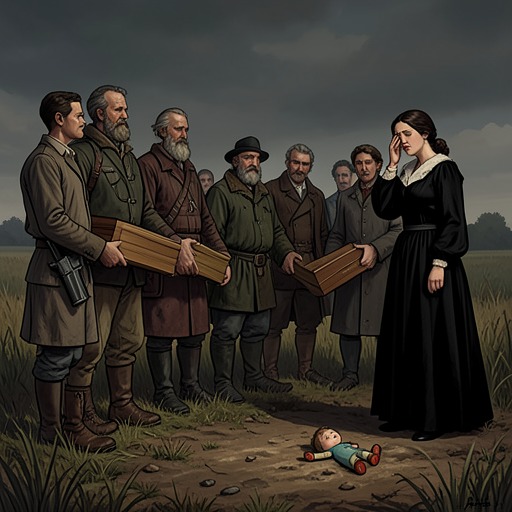
Their deaths deepen an already layered bereavement. Marcel describes Yolanda as collapsing afterward: she stopped sleeping and eating, left the house at night, and was sometimes found lying on the children’s grave. A priest who had conducted the funeral says she returned to the cemetery each week, convinced that the bodies were no longer in the tomb. He could understand the force of a mother’s grief, but believed the children had been buried there because he had witnessed their coffins being lowered into the grave. The contrast between that apparently settled account and Yolanda’s continuing conviction gives her insistence its central tension: her suffering makes others doubt her, while the empty grave will show that her claim was grounded in fact.
The Accusation and the Evidence
When Yolanda tells Amaia that her children were murdered and their bodies taken, the claim initially arrives in a form that invites disbelief: she is receiving psychiatric treatment, and her grief has made others describe her as confused or peculiar. But Amaia finds that Yolanda can stay with concrete details and state them clearly. She remains cautious, aware that any failure to verify the account could allow a lawyer to use Yolanda’s condition to undermine the investigation; caution, however, does not mean dismissing what she says.
Yolanda’s explanation is specific. She says Marcel became entangled with a group involved in dark offerings and gave the children to them; she also insists that their bodies were removed, leaving her with no place to mourn them. She does not claim to have seen anyone kill the twins. Instead, she presents responsibility and the missing bodies as the grounds for her accusation, then shows Amaia a photograph of the two babies, about three months old and dressed in blue pajamas. The image makes the children present in the interview even as their whereabouts remain disputed.
At the police station, Yolanda arrives in a burgundy dress and matching jacket, carrying a cardboard folder marked by the visible traces of her sweaty hands. When Amaia offers to take it, Yolanda presses it protectively against her hip. Her nervous handling of the folder contrasts with the precision Amaia has observed in her account: the woman is distressed, but her testimony is not simply a blur of grief. Amaia arranges for her to repeat what she has said in front of colleagues and records the conversation, giving the claim a formal setting in which details can be checked.
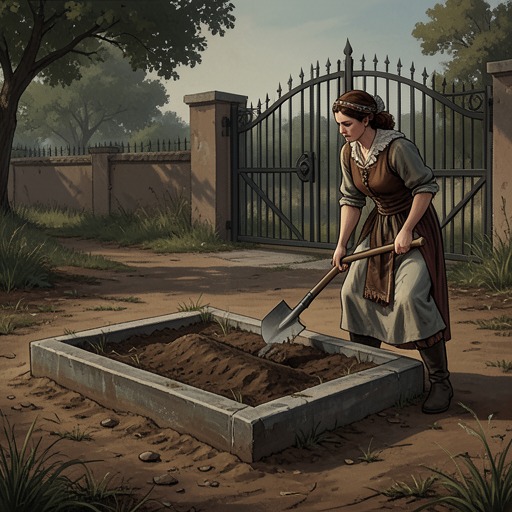
The apparent contradiction between Yolanda’s certainty and the official account becomes harder to contain after her attempt to open the family tomb. She uses an explosive, suffers catastrophic injuries, and, despite them, drags herself to the edge of the grave to check whether her children are inside. The act is dangerous and nearly fatal, but it also shows what the tomb means to her: not an abstract symbol of loss, but the place where the truth about her children’s bodies must be settled.
The Grave, the Missing Child, and the Ending
The explosion did not settle what Yolanda had been trying to prove. Although it left her gravely injured, she survived and was moved from Hospital Saint Collette to a ward. When Amaia visited, Yolanda acknowledged that the medication had confused her about which coffins were which, but not about the theft: her first daughter’s body was missing. She also understood what an ordinary inspection might have obscured. If the tomb had been opened earlier, the twins would have been found inside and her claim dismissed; the missing child might have remained undiscovered, and another bereaved mother from Elizondo might never have been believed. Yolanda’s certainty had been imperfect in its details, but the underlying accusation was true.
The physical evidence sharpened that distinction. Investigators had confirmed the twins were in the Ainhoa tomb, but a third, much smaller coffin contained a food packet of sugar where human ashes had been assumed to be. It belonged to Yolanda’s first daughter. The counterfeit contents made the grave both proof and deception: the tomb held the twins, as the priest had insisted, yet its apparent completeness concealed the child Yolanda had lost before them. Her pursuit had not simply challenged the account of her children’s burial; it had exposed how one true burial could help hide another body’s absence.
Yolanda had sought official help well before the grave was opened. She wrote to courts, the ombudsman, and the president of Navarra asking permission to inspect the tomb. A judge’s secretary contacted her, heard the details over coffee, and arranged an appointment with Judge Markina. After leaving hospital before her recovery was complete, Yolanda was again present when the investigation reached the gravesite. Seeing an opened, empty tomb, she affirmed that she had known from the beginning that something was wrong. Her maternal conviction, long treated as a symptom of grief, had led toward evidence that procedural caution and the family’s settled story had failed to reveal.
The discovery does not bring her search to a peaceful close. At the cemetery, Yolanda suddenly struck Amaia, knocking her down; Markina fired, and Yolanda fell with a fatal wound to the chest. He said he thought she was about to attack Amaia. Her death leaves the recovered truth inseparable from the violence that has surrounded its pursuit: she was right that a child’s body had been taken, but she did not live to recover it. Her story turns the grave into more than a site of mourning. It is an evidentiary boundary between what others can certify and what a mother continues to know, and the delayed confirmation vindicates her even as it cannot restore what she lost.
Responsibility and Recognition
After the explosion, Yolanda does not let Amaia turn the injury into a simple story of preventable harm. She accepts responsibility for her own mistake, explaining that fear and medication had led her to confuse the coffins, but insists that an earlier inspection might have confirmed the twins’ burial while leaving the missing girl undiscovered. In that case, the family could have continued to regard her as delusional, and another bereaved mother from Elizondo might never have been heard. Her reasoning widens the meaning of her search: it is not only a demand for her own children’s remains, but a warning that one mother’s credibility can determine whether another mother’s loss is investigated. Her insistence that she had known from the beginning what was wrong thus survives the errors surrounding the attempt to open the tomb; the grave’s evidence ultimately distinguishes mistaken details from the truth she had been trying to make others recognize.